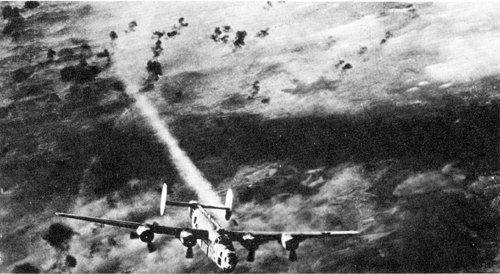
It was not necessarry
to get a direct hit from flak to sustain serious damage. Once the artillery
gunners determined the bomber formation's altitude, they would sometimes
fill an area of the sky with bursts of flak placed directly in the path
of the bombers. This "box" could be 2000 feet high, wide, and deep. From
the ground, the box looked like dark polka dots in the sky. From the cockpit
of a B-24, the "box" looked like a solid black cloud with red bursts in
it. The airmen called them "iron clouds". The flak shells were filled with
all kinds of steel fragments that could rip through the thin skin of an
airplane tearing up control cables, hydraulic lines, fuel lines and any
sort of vital part. They also did considerable damage to humans.
Lt. Edward Gleed, a P-51 Mustang pilot, said:
"We didn't want any part of that flak. It was a horrendous sight to see six B-24 Liberators with all that flak starting to come up and -bang - there's only five airplanes left and one big ball of smoke."*P-51 pilot Lt. Jefferson:
"Planes fell in flames, planes fell not in flames, an occasional one pulled out and crash-landed, sometimes successfully, sometimes they blew up. Men fell in flames, men fell in parachutes, some candlesticked (when their parachutes didn't open). Pieces of men dropped through the hole, pieces of planes.. Have you any idea of what it's like to vomit in an oxygen mask? ..These bomber guys had seen the inside of hell."*
*from The Wild Blue
by Stephen E. Ambrose
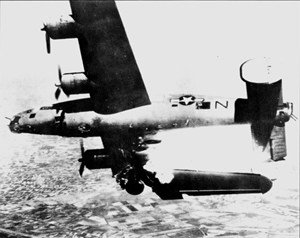
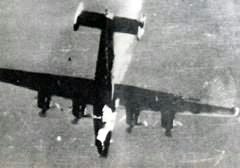
Don Pierce recalled counting the jumpers from a falling plane...
"We always
counted..."
The last man out (probably the pilot) opened his chute
only to fall through the bottom of the harness.
Don explained that
the strap that went under the crotch was pretty uncomfortable.
"In
all the excitement, the guy probably just forgot to fasten it."
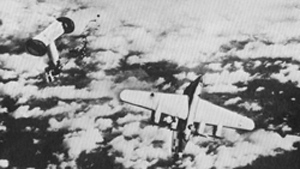
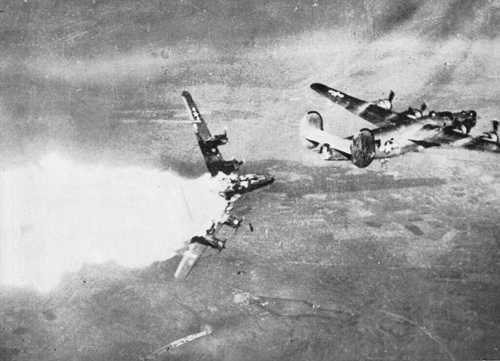
Six crew members escaped this stricken ship to become Prisoners of War. The pilot was shot soon afterward.
**B-24 Liberator Units of the Eighth Air Force - Robert F. Dorr
NEXT PAGE