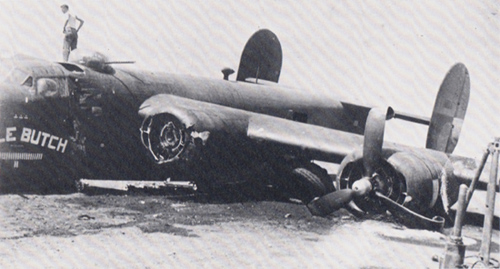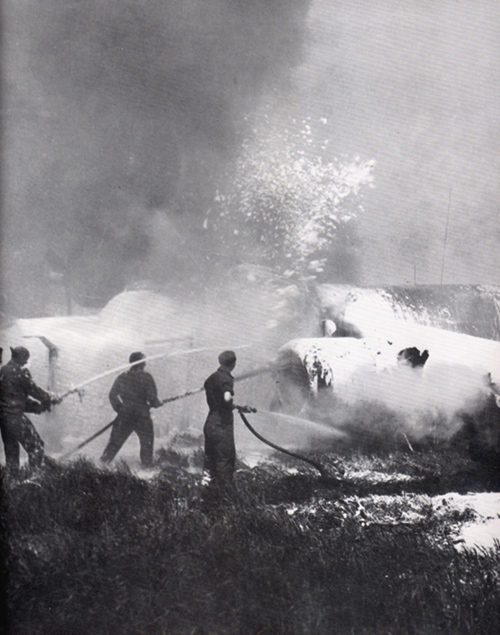
The beginning of the mission could be just as hazardous.
By the time the ships were loaded with bombs, fuel, and ammunition they were often loaded beyond their designed weight limit. The runways were not smooth. They weren't long. And frequently there were obstacles at the end of the airstrip. If the plane didn't develop full power and enough speed to achieve lift, there was usually no opportunity to abort the takeoff. The result was often deadly.
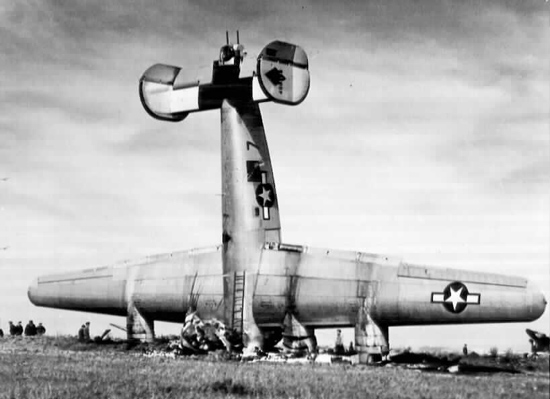
It was customary to apply brakes to the spinning wheels immediately after they cleared the ground so the gear could be retracted. The brakes were applied too early during the take-off run in this B-24 from the 454th Bomb Group. It resulted in the death of the pilot, co-pilot, navigator, bombardier, and injuries to other members of the crew.
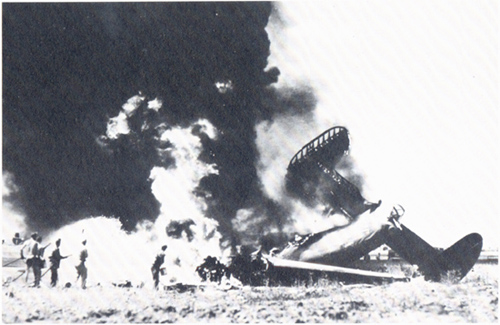
The planes lined up and took off 30 seconds apart. Once in the air, the first hour of the mission was spent climbing to altitude and forming up in the formation. In England this was often done in clouds and mid-air collisions were not uncommon. During the winter of 1943-44, according to some sources, the 8th Air Force lost as many aircraft and crew to flight accidents as it did to enemy action.